Website Marketing Funnel for Philippine Small Businesses
Build a website marketing funnel that connects search, social media, and messaging to real enquiries for your Philippine small business.

A useful website marketing funnel helps Philippine small businesses turn visits into enquiries and sales. Start by matching each marketing channel to a clear next step, then make that step easy to complete and track. You do not need to use every platform; choose the ones your customers already use and measure whether they bring relevant enquiries.
- Give each page one clear goal and call to action.
- Use search, social media, and messaging in ways that support the same customer journey.
- Make contact simple on mobile, including clear business hours and service areas.
- Track enquiries and sales, not just page views or likes.
What a website marketing funnel means for a small business
A marketing funnel is the path a potential customer takes from first hearing about your business to taking action. For a local service provider, that path might begin with a Google search, continue on a service page, and end with a call or message. For an online shop, it might start with a social post and finish with a completed order.
The goal is not to force people through a complicated sequence. It is to answer their questions at each step and remove avoidable friction. Your website should explain what you offer, who it is for, where you serve customers, and how to take the next step.
This is more specific than a broad marketing plan. If you need the wider strategy first, see our website marketing plan for small businesses in the Philippines. This guide focuses on connecting channels to useful website actions.
Choose one audience and one main action
Start with a clear audience. “Everyone in the Philippines” is too broad to guide page content or advertising. Instead, describe the people you can serve well: for example, homeowners in a particular city who need plumbing repairs, or local retailers looking for an online store.
Next, choose the main action you want visitors to take. It could be requesting a quote, booking an appointment, calling your business, or placing an order. Choose one primary action for each important page. A page with several competing buttons can make the next step less obvious.
Write a simple customer promise
Describe the customer, the problem, and the outcome in one plain sentence. For example: “We help Cebu cafés create a simple website where customers can view the menu and ask about reservations.” Keep the promise accurate and avoid claims you cannot support.
Use this sentence to guide your page headline, supporting details, and call to action. When a visitor lands on the page, they should quickly understand whether it is meant for them.
Build a landing page that answers real questions
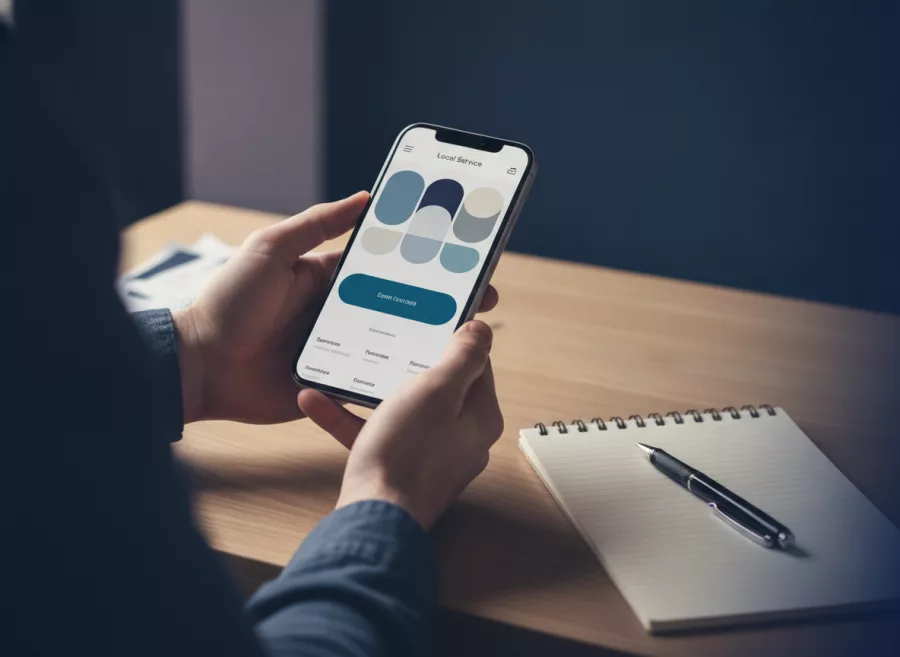
A landing page is a page designed around a particular service, product, or audience. It should give visitors enough information to decide whether to contact you. A strong page does not need flashy effects; it needs clear, useful answers.
- Explain the offer: State what you provide and who it suits.
- Show the service area: Name the cities, towns, or regions you actually cover.
- Set expectations: Explain what happens after someone enquires, such as a call to discuss their needs.
- Address common concerns: Cover process, delivery, payment options, or requirements where relevant.
- Make the next step visible: Use a clear button or contact link near the relevant information.
Keep the page easy to scan on a phone. Use short paragraphs, descriptive headings, and buttons with specific labels such as “Request a quote.” Make sure links work and forms ask only for information you need to respond.
For more detail on page structure and conversion basics, read our guide to an SEO landing page that turns search visits into useful leads. Google’s SEO Starter Guide also explains how clear, helpful content can support discovery in Search.
Connect search, social media, and messaging
Different channels can help customers discover and evaluate your business. Treat each one as a route to useful information, not as a separate marketing project with its own disconnected message.
Use search for people who are already looking
Make your site pages specific to your services and locations. A page about “air-conditioning repair in Cebu City” can be more useful to a local searcher than a vague page about home services. Write naturally and provide information that helps someone decide what to do.
Keep business details consistent across your website and public listings. If you serve a defined area, make that clear. Do not create location pages for places you do not genuinely serve.
Use social posts to direct interest to the right page
Share helpful updates, product details, or examples of your work on the social platforms your customers use. Link each post to a relevant page rather than sending every visitor to your homepage. A post about a particular service should lead to that service page, where the visitor can learn more or enquire.
Make messaging convenient, with clear expectations
Some customers prefer to call or send a message before committing. Offer the contact methods you can manage reliably, and explain when people can expect a reply. If you use a messaging app, link to the correct business account and test the link on a phone.
Do not make messaging the only way to get essential information. Keep important service details, policies, and contact options available on your website too.
Make the journey work well on mobile
Many visitors will see your site on a phone, so test the complete journey on a small screen. Open the page, find the main action, tap the contact link, and submit the enquiry form. Fix anything that feels unclear or difficult.
- Use readable text and buttons with enough space to tap.
- Keep the main contact option easy to find.
- Limit form fields to details needed for a useful response.
- Check that images do not push important information far down the page.
- Test the site on mobile data as well as a fast connection.
Fast pages and accessible layouts help visitors use your site. If your site is slow or difficult to use, review our website performance optimization service. For foundational website decisions, see what to build first for a small business website.

Track enquiries and improve one step at a time
Measure actions that relate to your business goal. Depending on your setup, this may include completed enquiry forms, calls from the website, quote requests, bookings, or purchases. Page views and social engagement can help you understand reach, but they do not prove that the site is generating business.
Keep a simple record of where enquiries came from. Ask new customers how they found you, or use tagged links in campaigns so you can distinguish visits from different sources. Record the date, source, enquiry type, and whether it became a sale. Avoid collecting personal details you do not need.
Use a short monthly review
- Check which pages and channels brought relevant enquiries.
- Note where visitors stopped, such as an unfinished form or a page with no clear next step.
- Choose one change, such as clarifying a service description or simplifying the form.
- Review the same measures after the change and keep a note of what you learned.
Do not change everything at once. A small, measured improvement can teach you more than a complete redesign without a clear reason. For a deeper approach to tracking outcomes, read how to measure marketing leads instead of search clicks.
Frequently asked questions
What is the first step in website marketing?
Choose a specific audience and a single action you want the website to support. Then make a page that explains your offer and guides visitors to that action.
Which marketing channel should a small Philippine business use?
Start with channels your likely customers already use and that you can manage consistently. Connect each channel to a relevant website page and review the enquiries it brings.
Should I send every visitor to my homepage?
No. Send visitors to the page that matches their interest. Someone who clicks a post about a specific service should land on information about that service.
What should I measure on my website?
Track useful actions such as calls, completed forms, bookings, and orders. Use visits and engagement as supporting context, not as the only signs of success.
How often should I update my marketing funnel?
Review it regularly, such as once a month. Make one practical change at a time, then check whether it improved the customer journey or enquiry quality.
Make your website easier to act on
A practical website marketing funnel does not require complicated software or a presence on every platform. Start with one audience, one useful page, and one clear next step. Connect your marketing channels to that page, make the journey work on mobile, and track real enquiries.
Need help improving your website or connecting it to your marketing goals? Contact Herby Design to discuss a practical next step.
Found this helpful? Share it
Need help with your website?
I build fast, SEO-ready websites and web applications.