
Website Marketing Philippines: A Simple Plan for Small Business
A practical website marketing plan for Philippine small businesses: choose a goal, improve your landing page, promote it through suitable channels, and track real results.

Website marketing Philippines works best when you connect each channel to a clear customer action. Choose one useful offer, bring the right people to a focused page, and measure enquiries or purchases—not just visits.
For a small business, you can start with a simple plan: improve one landing page, share it through channels your customers use, and review the results each month.
Key takeaways
- Start with one audience, one offer, and one main action.
- Make your page easy to use on mobile and clear about how to contact you.
- Use search, social media, email, or paid ads to reach the right people.
- Track completed enquiries and purchases, not only clicks.
- Improve one part of the customer journey at a time.
Build a website marketing Philippines plan around one goal
Marketing gets scattered when every channel, page, and post has a different purpose. Pick one business goal for the next month. Examples include more quote requests, more bookings, or more completed online orders.
Then identify the audience most likely to take that action. A Cebu-based repair business might focus on nearby homeowners. A local online shop might focus on buyers looking for a particular product or delivery option.
Write a plain sentence that connects the audience to your offer: “We help [customer] solve [problem] with [service or product].” Use this to guide your page copy and promotional posts.
Choose a measurable action
Give visitors one main next step. Depending on your business, that could be submitting a quote form, booking a consultation, calling, sending a message, or buying a product.
Keep supporting actions secondary. If a page asks visitors to call, message, fill out a long form, and browse several unrelated services, it may be hard to know what to do first.
Make the landing page useful before promoting it
A landing page is a page designed to help visitors take a specific action. Before sending people there, check that it answers their basic questions quickly: What do you offer? Who is it for? What should they do next?
Put the main offer and action near the top of the page. Add helpful details below, such as what is included, where you serve, how the process works, and what happens after someone contacts you.
Make contact simple and credible
Use a short form that asks only for details you need to respond. For a service enquiry, this might include a name, contact method, and a brief description of the request. Tell people when they can expect a reply, but avoid promising a response time you cannot meet.
Show accurate business details and use genuine customer feedback only when you have permission to share it. Be clear about service areas, delivery terms, payment options, or other details that affect a buyer’s decision.
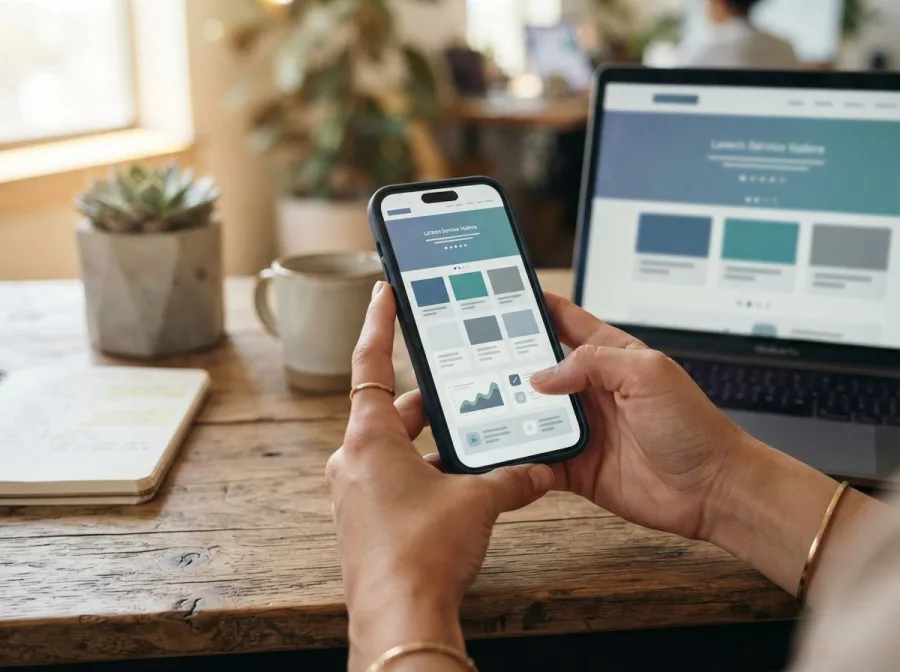
Review the page on a phone as well as a computer. Check that buttons are easy to tap, text is readable, forms work, and important details do not get hidden. If your site needs a larger redesign, explore website design and development.
Choose channels that fit your audience
You do not need to market on every platform. Choose one or two channels that suit the way your customers look for solutions, then make each one point to a useful next step.
Use search for people with a clear need
Search engine optimization can help people find relevant pages when they look for a service or product. Use the words customers use to describe their needs, and make each page specific to one service, product, or location where that is genuinely relevant.
Local businesses should keep their business information accurate and consistent across their website and profiles. Avoid creating thin pages for places you do not serve. For support with technical and on-page improvements, see search engine optimization services.
Use social and email to stay connected
Social posts can explain an offer, answer common questions, or show how a service works. Link to the page that best matches the post rather than sending every visitor to your homepage.
Email can help you follow up with people who have chosen to hear from you. Share useful updates and clear offers, and provide a straightforward way to stop receiving messages. Avoid adding people to a marketing list without their consent.
Try paid ads with a defined limit
Paid ads can bring attention to a specific offer, but they do not fix a confusing page. Before spending, set a budget you can afford, decide which action counts as a result, and check that tracking works.
Start with a small, controlled test. Compare the audience, message, and landing page against your goal. Do not judge an ad only by reach or clicks if the business needs qualified enquiries or sales.
Track enquiries and purchases, not just visits
Traffic shows that people arrived. It does not show whether they contacted you or bought something. Decide which actions matter, then record them in a simple spreadsheet or analytics tool.
For example, a service business could track completed quote requests, calls that become genuine enquiries, and qualified leads. An online store could track completed purchases and order value. Keep the distinction clear between a button click and a completed action.
Google Analytics 4 uses events to record interactions. Google’s documentation explains how to measure important actions as key events, and how conversions can be used for campaign measurement. See the Google guide to measuring conversions and key events.
Set up a simple measurement routine
- List the actions that represent real business value.
- Check whether your analytics tool records each completed action correctly.
- Use consistent campaign labels on promotional links so you can identify their source.
- Review results by channel and landing page, not just total site visits.
- Compare results over a useful period before changing your plan.
If you use Google Analytics, confirm that events fire only when the action is completed. A page view of a form is not the same as a successful submission. For broader guidance, read how to track marketing leads.
Improve results with small, regular tests
When results are weak, look for the point where people stop. Are visitors reaching the page but not contacting you? The offer may be unclear, the page may not answer key questions, or the contact step may be difficult.
Change one major element at a time. You might make the main button clearer, shorten a form, add missing service details, or match the page headline more closely to the ad. Then check whether the change improves the action you care about.
Use a monthly review
Set aside time each month to review channel activity, completed actions, and feedback from real customers. Note which questions people ask before buying. Use those questions to improve your pages and posts.
Do not assume a channel has failed after a few clicks, or that a popular post has produced business value. Keep records, compare like with like, and make decisions based on your goal. If pages load slowly or behave poorly on phones, consider website performance optimization.
Frequently asked questions
What is website marketing?
Website marketing uses a business website together with channels such as search, social media, email, or advertising to attract relevant visitors and encourage useful actions.
How can a small business start website marketing in the Philippines?
Choose one audience and offer, prepare a focused page, select one or two suitable channels, and track completed enquiries or purchases.
Do I need paid ads to get website visitors?
No. You can work on search visibility, social content, referrals, and email. Paid ads are optional and should have a clear budget and goal.
What should I measure on my business website?
Measure actions tied to your goal, such as completed forms, qualified enquiries, bookings, or purchases. Treat visits and button clicks as supporting information.
Make your next marketing step clear
Effective website marketing is a repeatable process: choose a goal, help visitors act, promote the right page, and learn from completed results. Start with one improvement you can finish this week. If you want help planning or improving your website, contact Herby Design.
Found this helpful? Share it
Need more website leads? A simple plan for Philippine small businesses: set a goal, improve your landing page, promote it, and track what works.#SmallBusiness #DigitalMarketing #SEO #Business
Caption and hashtags copied: paste them into your post.
Need help with your website?
I build fast, SEO-ready websites and web applications.